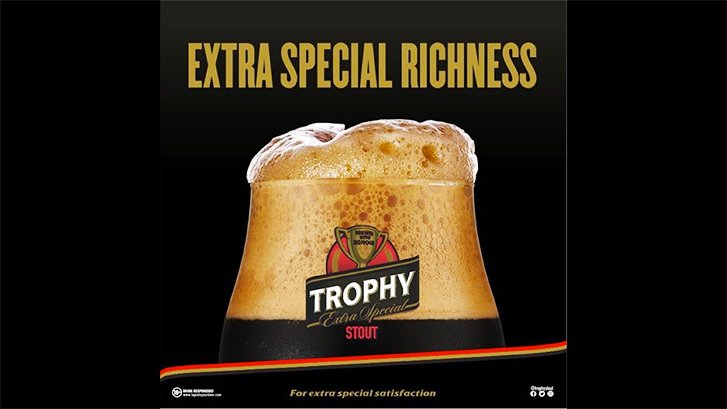
Beer brands rarely want to sell you only beer.
They sell friendship, confidence, celebration, masculinity, status, music, football, nightlife and belonging. The liquid is important. The world around the liquid is where the brand becomes valuable.
Trophy Extra Special Stout’s new campaign is making an unusually large claim on that world.
“No DNA Needed, Originally Black” positions the stout around Black identity, originality and what the brand describes as a tradition of African leadership. The campaign features ambassadors including Tacha, 2Baba, Simi Drey and Made Kuti, while planned “Black Parties” in Lagos and Abuja will carry the platform into physical experience.
The press-release version is that Trophy Extra is celebrating originality.
The marketing question is more interesting: how much culture can a stout brand credibly own?
Stout Has Always Carried More Weight Than Refreshment
Beer can be casual. Stout often arrives with a heavier personality.
Dark colour. Richness. Strength. Heritage. Adult taste. Seriousness.
Brands in the category have repeatedly used those associations to build worlds around status, confidence and identity. Trophy Extra is taking that symbolic vocabulary and attaching it explicitly to Blackness.
That is strategically useful because product attributes and cultural attributes begin reinforcing each other. The beer is black. The campaign is Black. The consumer is invited to treat that connection as meaningful rather than accidental.
“No DNA Needed” Is Doing a Lot of Work
The line is provocative because it collapses biology, culture and attitude into a single claim.
The brand’s explanation is that Africans do not need to prove their identity or capacity for leadership. “Original” is being presented as something inherent.
That gives the campaign confidence. It also creates risk.
Identity marketing becomes weak very quickly when it sounds like a corporation borrowing pride it has not earned. Consumers can tell when culture is being used as decoration.
SoroSoke has already written about why brands cannot simply put on Nigerian language when they need relatability. The same principle applies here. Black identity cannot be a costume worn for a campaign season.
The Ambassadors Are Different Versions of “Original”
The casting is interesting because the campaign does not use one archetype.
2Baba brings longevity and established cultural status. Made Kuti carries a famous musical lineage while still needing to define his own generation. Tacha represents digital-era celebrity and self-made attention. Simi Drey operates across media and lifestyle.
The mix helps the brand stretch “leadership” beyond boardrooms and titles.
But the campaign will be strongest when the people are not merely famous illustrations of a pre-written line. Their individual stories need to demonstrate what the brand means by originality.
Movements Are Harder to Sell Than Products
Trophy’s marketing team says it sells movements, not merely brands.
That is an ambitious sentence.
A movement asks people to participate. It develops rituals, symbols and language that consumers use even when the brand is not present. A campaign only asks people to notice.
The planned Black Parties therefore matter more than they look. They give the positioning somewhere to live physically. The question is whether those experiences create culture or simply produce branded photos.
Can a Commercial Brand Own Something This Big?
No company owns Black identity.
The smartest version of this strategy is therefore not ownership. It is contribution.
If Trophy Extra can consistently support spaces, people and stories that embody the version of originality it is talking about, the campaign can accumulate credibility.
If “Originally Black” disappears when the media budget ends, consumers will correctly understand it as an advertising theme.
This is the difference between cultural positioning and cultural borrowing.
The Category Battle Is Really About Meaning
In mature categories, functional differences eventually become difficult to dramatise. Everyone is cold. Everyone is refreshing. Everyone has a bottle, a can and a price.
So the battle moves upward.
What does drinking this say about me?
That is the territory Trophy Extra is entering.
TL;DR
Trophy Extra’s “No DNA Needed, Originally Black” campaign connects stout with Black identity, originality and leadership.
The interesting test is not whether the television commercial looks good. It is whether the brand can contribute enough to the culture it is borrowing from for the positioning to feel earned.
You can buy media around an identity.
You cannot buy ownership of it.
SoroSoke.
Related SoroSoke reading: celebrity casting as audience strategy.