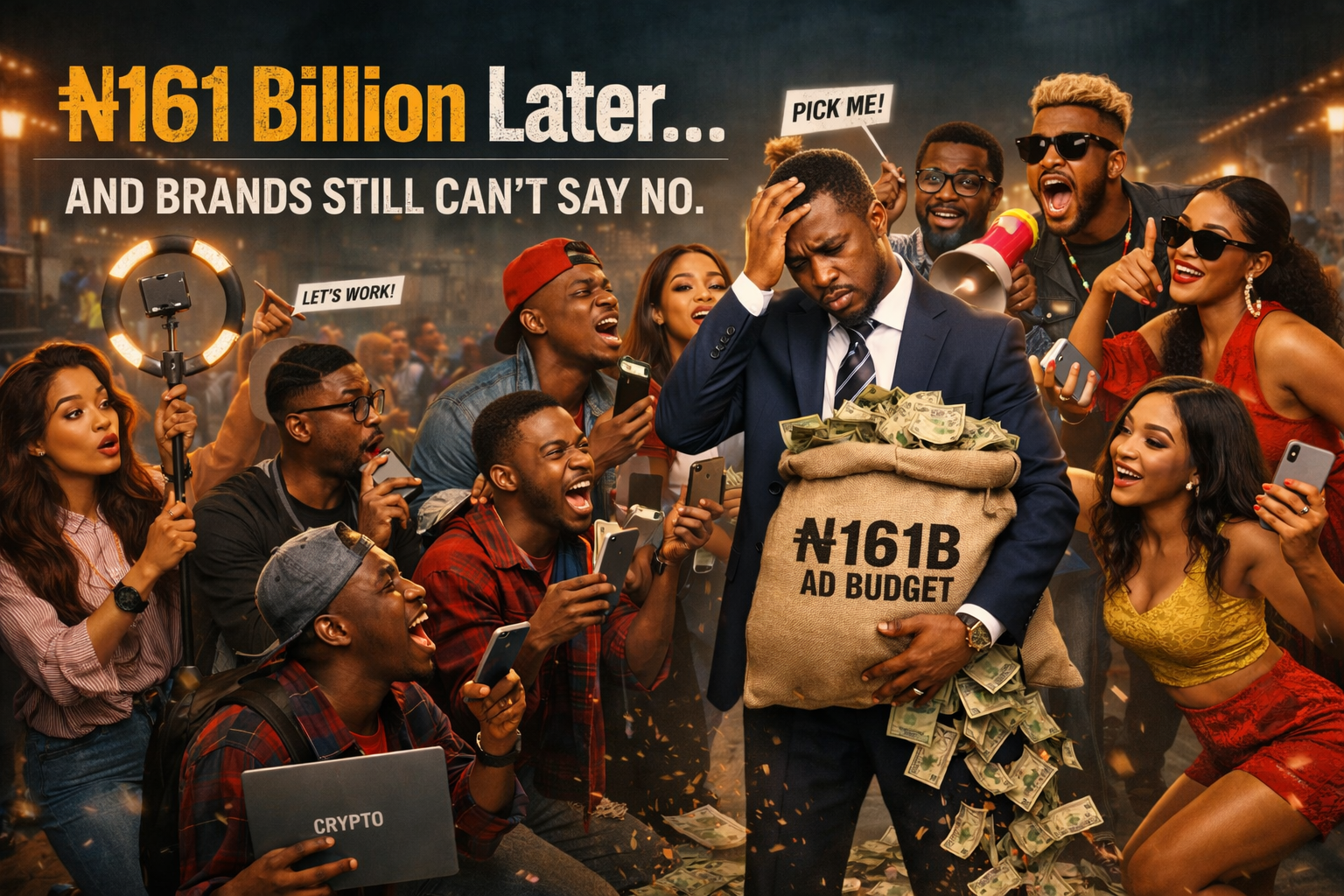
The fourth Nigeria Influencer Marketing Report is out. ₦161.4 billion spent since 2021. TikTok nearly level with Instagram. The market is maturing. The data is there.
And yet.
Pick any two weeks in Nigerian social media history and you will find a brand caught in a crisis it created by attaching itself to the wrong face. A product endorsed by someone who three weeks later became the most controversial person on Twitter. A campaign built around a creator who posted something that made the brand’s legal team sweat. An activation that launched the same week as a celebrity scandal — featuring that celebrity.
This is not bad luck. It is a process failure.
The Real Problem Is Not the Influencer
Nigerian brands have a due diligence problem disguised as an influencer problem.
The selection process for most Nigerian brand-influencer collaborations still runs on three metrics: follower count, engagement rate, and whether someone on the marketing team has heard of them. That is not selection. That is recognition.
Real influencer vetting looks at the creator’s full content archive — not just their last ten posts. It looks at the comments section, not just the post performance. It looks at the creator’s public statements on topics adjacent to your brand’s values. It asks whether the creator has a pattern of behaviour that your brand’s customers might have strong opinions about.
READ ALSO: Mouka has a New MD
This process takes time. It requires a brief, not just a DM. And most Nigerian marketing teams — under campaign deadline pressure, working with agencies that are themselves under deadline pressure — skip it.
The NIMR report flags that 20% of brands have serious concerns about fraudulent engagement. But fake followers are the easy problem to detect. The harder problem — the creator who is genuinely popular and genuinely a liability — is the one that costs millions after the contract is signed.
Why Nigerian Brands Keep Saying Yes When They Should Say No
Three pressures override good judgement in Nigerian influencer selection.
The first is FOMO. If a creator is trending, everyone wants to be associated with the moment. Trend-chasing kills the evaluation window. By the time a brand asks the right questions, the moment has passed — so they skip the questions.
The second is senior approval pressure. Nigerian marketing teams frequently have to justify influencer choices to leadership that knows creators by fame, not fit. “But everyone knows this person” becomes the brief. Familiarity replaces due diligence.
The third is agency capture. When a brand outsources influencer selection entirely to a marketing agency, they often receive recommendations from that agency’s existing creator network — creators the agency has relationships with, not necessarily creators right for the brand. The conflict of interest is rarely named.
The Fix Is Not Complicated
A brand-influencer fit checklist takes twenty minutes to build and saves millions in damage control.
Does this creator’s audience overlap with our actual customer base — not just our aspirational one?
Has this creator publicly engaged with topics that could expose our brand to controversy?
Does this creator treat sponsorships as commerce or endorsements — and does that match our brand positioning?
If this creator was in a public controversy tomorrow, what would our response be? Can we live with it?
The NIMR’s most important recommendation for 2026 — the shift from one-off influencer deals to long-term ambassador relationships — only works if the selection process at the start is serious.
You cannot build a long-term ambassador relationship with someone you chose because they were trending last Tuesday.
SoroSoke Brand Tip: Before your next influencer deal, spend 30 minutes on the creator’s comment section — not their post analytics. The comments tell you everything the follower count hides.
What is the most important thing Nigerian brands overlook when selecting influencers? Share your experience.