Let us be precise about what happened, in exact order, because the sequence is the entire story.
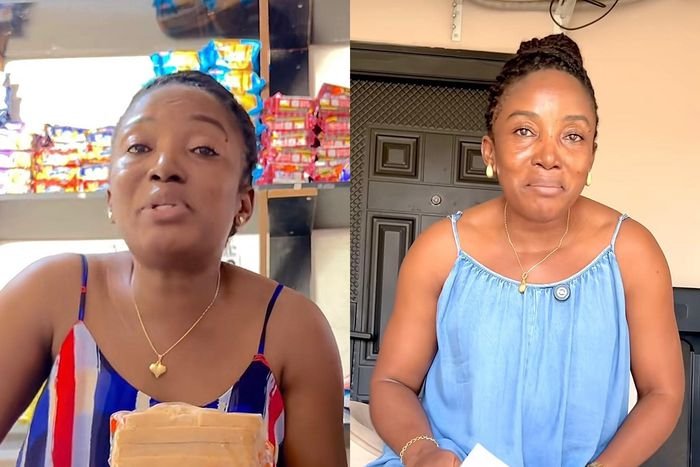
Love Dooshima, an Abuja-based provisions store owner, posted a video online. In the video, she said a loaf of bread had remained on the shelf of her shop for over two months without spoiling. She was raising a food safety concern. She named no brand. She showed no logo. She identified no company.
Bon Bread, a Lagos-based bakery operating since 2006, watched this video and reached out to her via direct message. They identified themselves. They made it known, to her and to anyone watching, that this video was about their bread.
Then it got worse.
Bon Bread filed a formal police complaint against Dooshima. She was invited to Zone 7 Police Headquarters in Abuja on April 20, 2026, under the impression it was a routine questioning. She was detained. Her phone was confiscated. She was treated, in her own words, as a criminal. She was not released until 12:30am on April 21, following the intervention of human rights lawyer Inibehe Effiong, activist Precious Orueche, and ultimately the Inspector General of Police, Tunji Disu.
The charges filed: cyberstalking, fraud, and mischief.
For a video about bread. That did not mention their name.
The Reputational Arithmetic That Bon Bread Did Not Do
Before Bon Bread’s intervention, their exposure was limited. A viral video about bread staying fresh too long. Some food safety discussion on social media. A generic consumer concern that could have been about any of dozens of Nigerian bread brands. Most Nigerians watching that video had no idea which brand was being discussed — because no brand was named.
Bon Bread then did, in sequence, the following: identified themselves publicly by reaching out. Filed a police complaint that put their name on a legal record. Had a Nigerian citizen arrested, which national media covered with their name in the headline. Sued her for ₦50 million, which national media covered with their name in the headline. Triggered an FCCPC investigation — which national media covered with their name in the headline. Triggered NAFDAC engagement to analyse the bread sample — which national media covered with their name in the headline.
They turned a nameless consumer concern into a national food safety investigation with their brand at the centre of it. They did this voluntarily. Nobody forced them to identify themselves. Nobody forced them to call the police. Nobody forced them to file a ₦50 million lawsuit. Every step that made this worse was a choice they made.
This Is the Erisco Pattern. Again.
Those with institutional memory will recognise this immediately. In 2023, Erisco Foods came after Chioma Offor, a Nigerian woman who gave their tomato paste a one-star review. The company’s CEO threatened her publicly. Erisco became one of the most boycotted brands in Nigerian social media history for months. Consumer protection advocates named it as the definitive example of a Nigerian brand using corporate power to silence a consumer and paying a reputational price that no marketing budget could repair.
The lesson from Erisco was clear, documented, widely discussed, and apparently not transmitted to whoever handles crisis response at Bon Bread. Three years later, the exact same playbook was run. Consumer says something unflattering. Brand escalates rather than engages. Police get involved. National outrage follows. FCCPC opens investigation. Brand is now associated in the Nigerian public mind with corporate intimidation rather than with whatever they were trying to protect.
Erisco Foods vs Chioma is still in court. Still. The case that was meant to protect Erisco’s reputation is still in the Nigerian court system, still generating periodic media coverage, still reminding consumers every time it surfaces that this is a brand that sued a woman for a one-star review. Bon Bread has now enrolled in the same extended educational programme.
What Dooshima’s Video Was Actually Worth to Bon Bread
Here is the genuinely infuriating part of this story for anyone who understands brand management. Dooshima’s original video was a gift, not a threat.
A consumer publicly expressing concern about bread staying fresh too long is a consumer who cares about food quality. That concern, handled correctly, is an invitation to demonstrate your quality credentials. It is an opportunity to say: here is how our bread is made, here are our preservation standards, here is why our product is safe. Done well, that response builds consumer trust. Done very well, it goes viral for the right reasons.
The CEO of Bon Bread could have recorded a five-minute video walking through their production facility, explaining their processes, addressing the food safety question directly, and inviting Dooshima and the public to visit their bakery. That video would have cost them nothing but time. It would have generated genuine positive press. It would have turned a potential negative into a quality story.
Instead, they called the police.
The woman who could have been their most valuable case study in consumer engagement is now a symbol of corporate intimidation. The FCCPC investigation they triggered is now examining their product. NAFDAC is analysing their bread. And every Nigerian who sees the name Bon Bread for the next several years will think of a hypertensive widow detained at a police station at midnight for posting a video about bread.
The CEO’s Video Made It Worse
As if the detention and lawsuit were insufficient, the Bon Bread CEO subsequently released a public video defending the company’s actions and production processes. According to coverage from Brand Communicator, this video “amplified the situation further” — bringing additional attention to a controversy that was already consuming national media oxygen.
There is a specific crisis communications error being made here that has a name: the amplification trap. Every time a brand in crisis issues a defensive public statement, it generates a new news cycle about the crisis. The media does not cover the statement in isolation — it covers the statement alongside the original incident, which means every new communication produces a new wave of people encountering the original story for the first time. The CEO’s video did not put out the fire. It handed the fire a new fuel source.
What the FCCPC Investigation Actually Means
The Federal Competition and Consumer Protection Commission has opened a formal investigation. NAFDAC is testing the bread. These are not soft outcomes. They are regulatory processes with the potential to produce findings that become permanent public record, inform future consumer protection enforcement, and potentially affect the company’s ability to operate normally.
A brand that had handled this correctly — acknowledging the consumer’s concern, inviting regulatory scrutiny proactively, demonstrating transparency about their processes — would have come through a food safety question with their credibility intact or even enhanced. A brand that fought a widow through the Nigerian police force and a ₦50 million lawsuit now faces that same regulatory scrutiny from a position of severely damaged public trust.
The regulators investigating Bon Bread today are not neutral parties responding to an abstract food safety question. They are responding to a situation in which a Nigerian brand used law enforcement to silence a consumer. That context does not disappear when the technical food safety investigation begins.
SoroSoke Brands Tip: Print this case and put it in the crisis communications section of every Nigerian brand’s marketing playbook. When a consumer says something unflattering about your product without naming you — the correct response is silence, or engagement, never identification and escalation. The moment you identify yourself as the unnamed brand, you own the story. The moment you involve law enforcement, you hand the story to every national newspaper, every human rights lawyer, and every consumer protection regulator in the country. Bon Bread had the option to stay invisible. They chose to become the story. That choice will follow this brand for years.