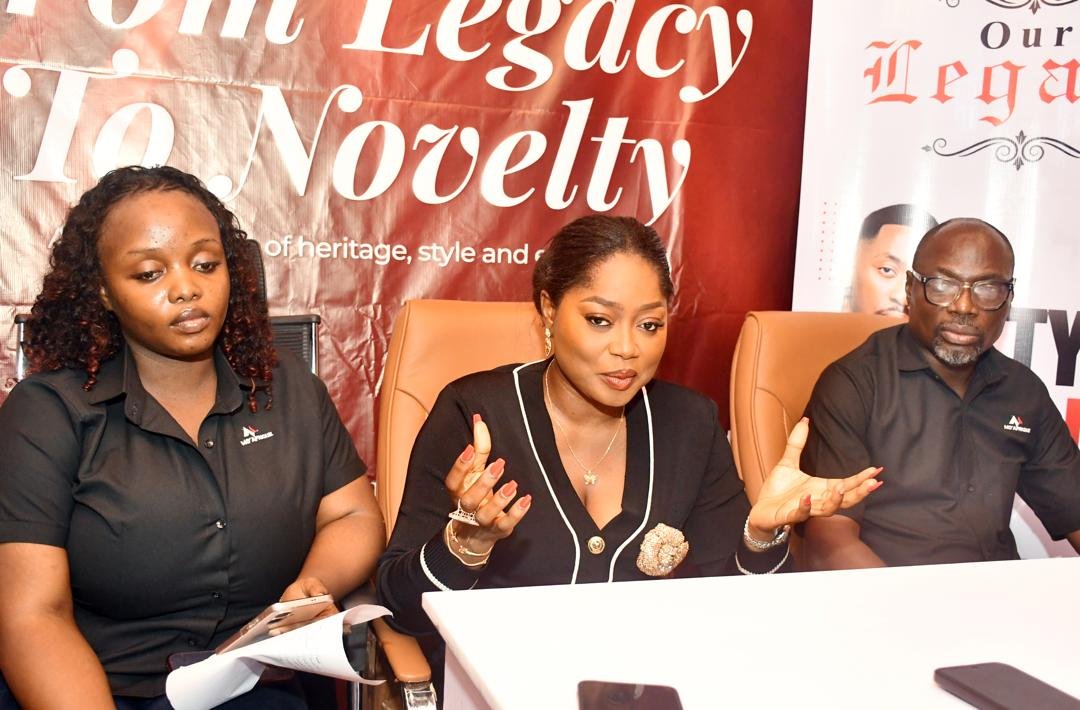
Mo’Afrique launched Modish April 26, 2026. Simultaneously, the fashion house commissioned a garment manufacturing facility. The debut line — Modish Formals — targets corporate wear and institutional uniforms, combining premium design aesthetics with industrial-scale production capability.
The business press will cover this as a fashion and manufacturing story. SoroSoke Brands is covering it as a brand architecture story — because what Mo’Afrique has done is attempt one of the hardest brand moves in any industry: deliberately splitting a premium brand’s DNA across two very different market positions without destroying what made the premium brand valuable in the first place.
The Premium-to-Mass-Market Brand Architecture Problem
Mo’Afrique was built on a specific brand promise: African heritage translated into contemporary, quality-forward fashion. That promise has value precisely because it is not mass-market. The scarcity of the craftsmanship, the specificity of the cultural reference, the premium positioning — these are features, not limitations. They are what the Mo’Afrique brand means to the consumer who chooses it.
Modish is designed to take that design expertise and run it through industrial-scale production. The challenge — and every fashion brand that has attempted this transition has faced it — is that industrial scale is the enemy of the scarcity that makes a premium brand premium. When Mo’Afrique’s design language appears on a bulk uniform order for a corporate client, what happens to the Mo’Afrique brand equity in the mind of the consumer who paid a premium for a piece precisely because it was not a bulk uniform?
The answer depends entirely on whether Modish is successfully positioned as a genuinely separate brand — with its own identity, its own consumer positioning, and its own brand story — or whether it remains recognisably a Mo’Afrique product in a different price segment. The former can work. The latter almost always cannibalises the parent brand’s premium positioning over time.
Why a Separate Brand Was the Right Call
The fact that Mo’Afrique gave the mass-market offering its own name — Modish — rather than calling it “Mo’Afrique Business” or “Mo’Afrique Pro” suggests that at least part of this distinction has been thought through. A separate name creates structural separation in the consumer’s mind between the premium parent and the mass-market child.
What Modish needs to do now — through its own marketing, its own visual identity, its own brand narrative — is earn distinctiveness that does not lean on Mo’Afrique’s equity. If Modish’s primary selling point is “from the designers behind Mo’Afrique,” it is parasitic on the parent brand. If Modish’s selling point is something specific to its own value proposition — precision at scale, consistent quality for institutional buyers, African design language accessible at volume — it can stand independently.
The manufacturing facility is actually the most interesting brand asset in this story. A Nigerian fashion brand that owns its production infrastructure has a quality control claim that no brand relying on external production can make. That is a genuine differentiator in a market where institutional buyers cite consistency concerns as the primary reason they default to imported uniform suppliers.
SoroSoke Brands Tip: Watch how Mo’Afrique manages the communication architecture between the two brands over the next twelve months. The temptation will be to constantly reference the parent brand in Modish’s marketing — using Mo’Afrique’s premium equity to sell Modish’s mass-market credentials. Resist it. The brands that build the cleanest separation between their premium and mass-market lines are the ones that preserve premium equity longest. The moment Modish starts trading on Mo’Afrique’s name to close institutional contracts, the premium price ceiling on Mo’Afrique starts to lower.