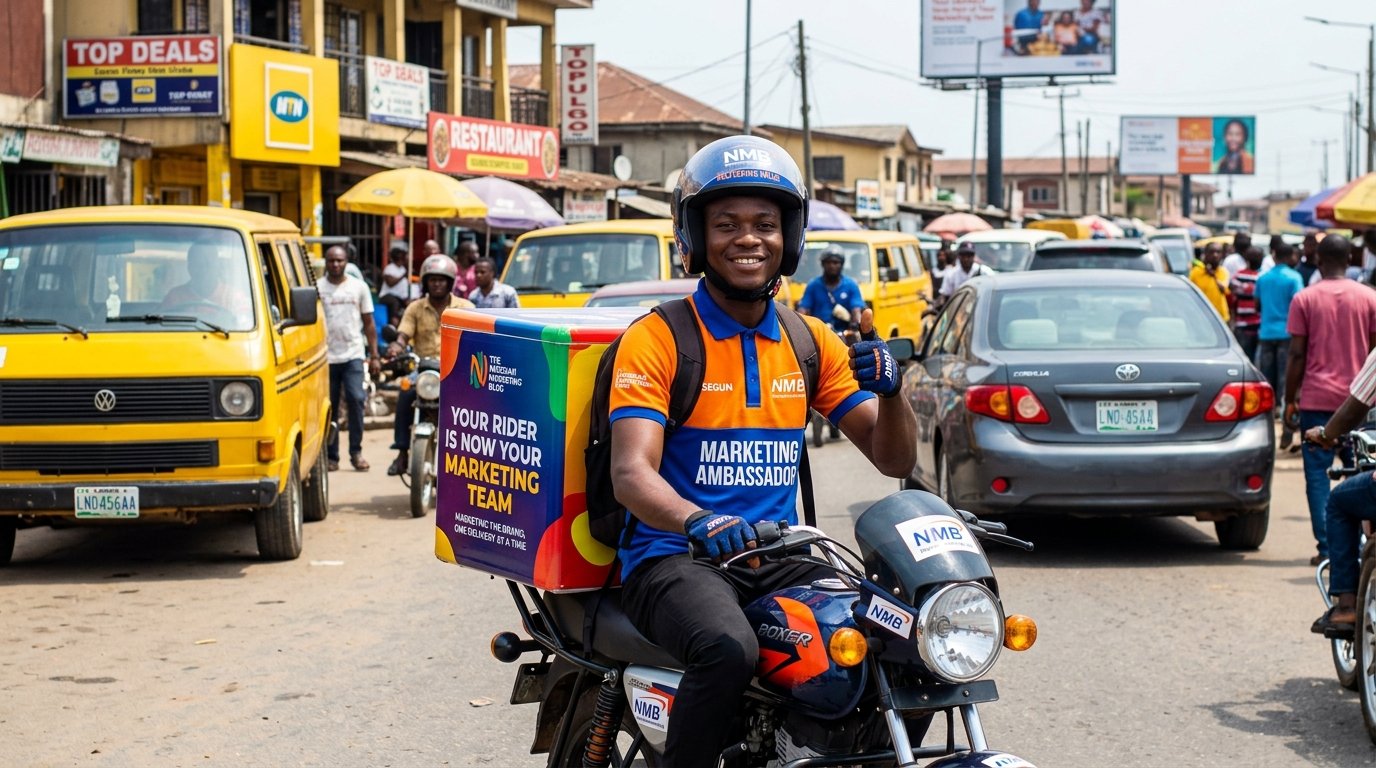
A Glovo rider shows up at your gate. He is late. His bag is torn at one corner. He hands you a nylon bag from inside the branded sack — the restaurant’s packaging, not the delivery platform’s. The interaction takes ninety seconds. He does not make eye contact. He leaves.
That ninety-second moment is marketing. You just did not design it.
For Nigerian brands that use third-party logistics — Glovo, Bolt Food, Kwik, Treepz, dispatch riders booked through WhatsApp — every delivery is a brand touchpoint. The rider is not just moving product. They are the last physical representative of your brand in the consumer’s world. The condition of the packaging, the manner of the interaction, the time accuracy, the smell of the bag — all of it forms a brand impression that your Instagram grid, your TV commercial, and your billboard cannot override.
The Last Mile Is the Most Memorable Mile
Consumer psychology research is consistent on this: the end of an experience carries disproportionate weight in how people remember the whole thing. The restaurant meal that ended with a poor dessert is remembered as a disappointing meal. The order that arrived on time in clean packaging with a handwritten note is remembered as a good brand experience — regardless of what happened before it.
Nigerian brands understand this at the physical retail level. The best stores in Lagos invest heavily in how the environment feels, how staff interact, how the checkout experience concludes. They understand that the last impression is the most durable one.
And then they hand their last impression over to a third-party logistics rider with no brief, no training, no standards, and no accountability — and wonder why their brand perception scores do not reflect the quality of the product.
What Brands Actually Control in the Delivery Moment
You cannot control the rider’s mood. You cannot always control delivery time. You cannot control the condition of a third-party platform’s equipment. What you can control is everything that comes from your side of the transaction.
Packaging that maintains its structural integrity in a delivery bag and still looks intentional when it arrives. A personalised insert — a card, a sticker, a note — that transforms the unboxing from a transaction into a moment. Clear instructions to your logistics partner about how items should be handled. A post-delivery message that closes the loop and invites feedback before the consumer has time to post a complaint.
These are not expensive interventions. They are design decisions. And most Nigerian brands have not made them because nobody has framed the delivery moment as a marketing responsibility. It sits in operations. Operations optimises for cost and speed. Marketing optimises for brand impression. When the delivery moment belongs to operations, brand impression is not in the brief.
The Brand That Gets This Right First Owns the Category Memory
In every consumer category where delivery is a meaningful purchase channel — food, beauty, fashion, pharmaceuticals, FMCG — the brand that designs the delivery experience will be remembered differently from the brands that do not. Not because consumers consciously evaluate delivery design. But because the emotional quality of the last moment sticks, and that stickiness is what drives repeat purchase and word-of-mouth.
The Nigerian brand that is first in its category to treat the delivery rider as the final chapter of its marketing story will own a brand association its competitors will spend years trying to replicate.
SoroSoke Brands Tip: Audit your last delivery interaction right now. Order your own product using the same channel your customers use. Time it. Photograph the packaging when it arrives. Read the interaction as if you were a first-time customer. What you find is your actual brand experience — not your intended one. The gap between those two is your delivery marketing brief.