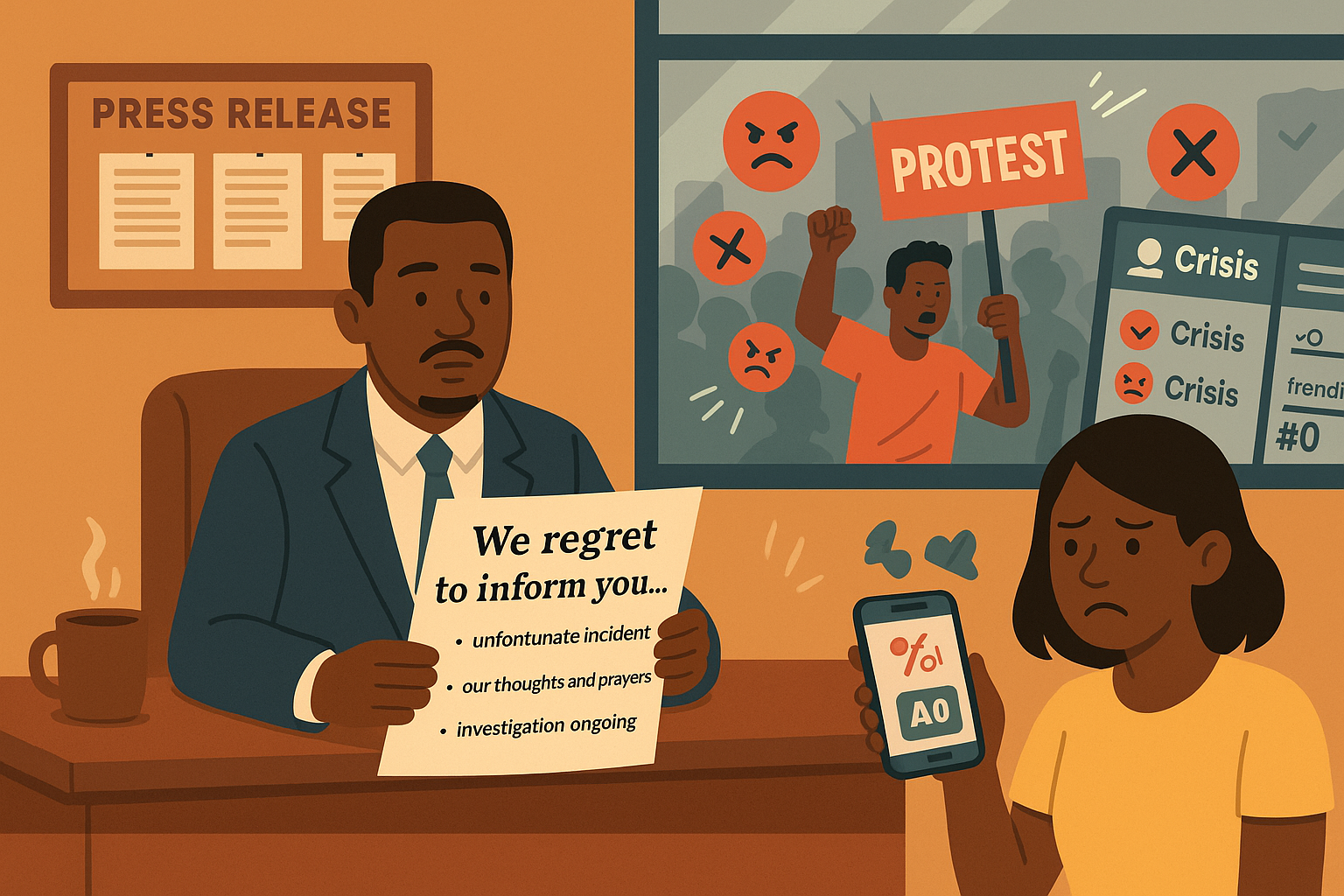
If you’ve been online in Nigeria for longer than 10 minutes, you’ve seen it:
“We regret to inform you that the incident currently circulating does not reflect our values as a company…”
The font? Times New Righteous.
The tone? Robotic, cold, uninspired.
The real issue? A total lack of accountability or emotional intelligence.
In 2024 alone, we’ve seen at least 7 brand apologies after some form of backlash — product issues, CEO scandal, tone-deaf ads, employee abuse, the works.
Yet somehow, every crisis statement looks and sounds the same.
Corporate. Defensive. Sterile.
Like they’re more worried about clearing HR than connecting with humans.
What Nigerian Brands Still Don’t Get About Crisis Comms
Crisis communication is not just about posting a statement.
It’s about:
-
Owning up quickly
-
Being specific
-
Showing empathy
-
And outlining real steps for change
Instead, what we get is:
“We are investigating the matter and will take appropriate action.”
That’s code for: “We hope this dies by Monday.”
Let’s Break Down the Typical Template:
Line 1:
“We are aware of the recent incident…”
→ So you waited until it trended on Twitter?
Line 2:
“We take these allegations seriously…”
→ Yet you didn’t take them seriously enough to speak in plain, human English?
Line 3:
“This does not represent who we are…”
→ But your staff did it. On your premises. In uniform.
Line 4:
“We will take appropriate disciplinary measures…”
→ Meaning you’ll ghost the internet until the next election cycle?
A Few Notorious Offenders:
-
Naira Marley’s team after the Mohbad saga
-
Access Bank during mass layoffs in 2020
-
Erisco Foods, post-customer arrest
-
Flutterwave, after repeated staff complaints surfaced
-
Nigerian telcos, every time their networks crash nationwide
All delivered with the same copy-paste apology style, often in white text on a dark square.
Why This Hurts More Than It Heals
-
Customers feel dismissed.
If you can’t even address them directly, they’ll take their loyalty elsewhere. -
It kills brand trust.
A crisis should be a test of your humanity — not your legalese. -
It invites more backlash.
When you don’t go deep, the audience digs deeper. And they’ll find things.
What Good Crisis Comms Looks Like
Let’s rewrite a typical apology in human language:
“We messed up. What happened was wrong, and it shouldn’t have. We’re sorry — not because we got caught, but because we failed the people who believed in us. Here’s what we’re doing next…”
Now that? That’s how Zikoko, Netflix, or even some sharp SMEs have won back trust.
READ ALSO: Every skit is now an ad
Apologies should sound like people. Not like policy documents.
SoroSoke Take
If your crisis statement looks like it was copied from ChatGPT with a legal disclaimer attached, you’re doing your brand more harm than good.
Nigerians can smell PR nonsense from three feeds away.
So if you’re not being real, you’re not being read. You’re being dragged.
TL;DR
-
Nigerian brands treat crisis like a template, not a moment of truth
-
Most apologies sound the same — cold, vague, and void of action
-
The fix? Write like you mean it. Own the mess. Show the plan. Speak like a human being.
Should we rank Nigerian apology statements from best to worst?
Or break down who actually handled their PR right?
DM us or drop a tip: editor@sorosokebrands.com